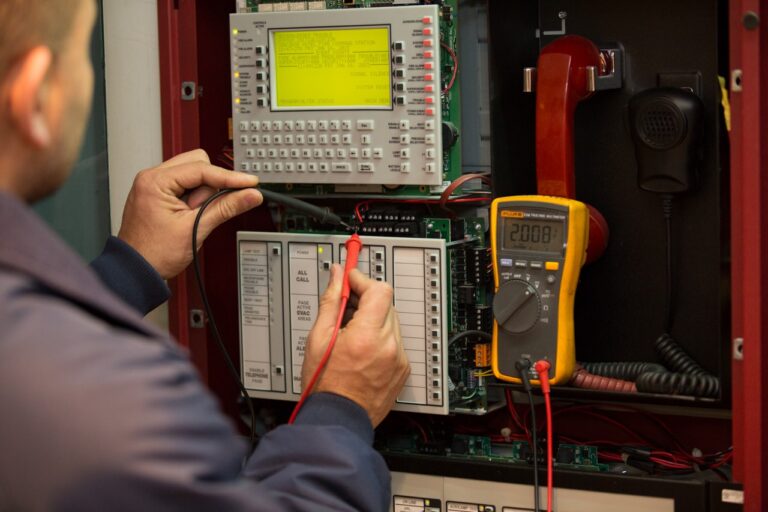
If you manage a Northeast Florida business, preparing for a fire alarm service visit starts before the technician arrives. Having the right records, building access, and responsible people available can help the visit run smoothly and make follow-up easier.
How do you prepare for a commercial fire alarm inspection?
Confirm the scope with your qualified fire alarm provider, gather available system and previous service records, arrange access to equipment and occupied areas, and coordinate notifications and testing procedures. Keep track of documented deficiencies and the plan to address them. Ask the local fire authority about requirements specific to your building.
This is an organizational checklist, not a technical testing procedure or a determination of code compliance. The applicable requirements depend on the system, occupancy, work being performed, and authority having jurisdiction—the local authority responsible for enforcing the requirements.
First, clarify which visit is scheduled
A contractor’s inspection or testing of the fire alarm system is not the same as a general fire safety inspection by the local authority. A visit related to new installation or alterations may also have a different scope. Ask who is attending, what they will evaluate, and what documentation or access they need.
St. Johns County’s information for business owners and managers explains its fire safety inspection process and directs owners to preparation resources. The county notes that its checklists address common issues rather than every code requirement. Properties in other jurisdictions should confirm their own local process.
Gather the records you have
- Previous inspection, testing, and service reports.
- Open deficiency reports and records of completed corrective work.
- Available system documentation, drawings, and operating information.
- Contact information for the owner, facility manager, alarm service provider, and monitoring provider where applicable.
- Information about renovations, changes in room use, or recent system problems.
If documents are missing, tell your provider before the appointment. Ask what is needed and how it can be obtained. Do not create or alter service records to fill a gap.
Arrange access and a responsible contact
Identify who can provide authorized access to the panel, equipment rooms, tenant spaces, and other locations included in the agreed scope. Coordinate with landlords, property managers, or tenants where necessary. Keep the approach to equipment accessible and tell the provider about site restrictions.
Choose a contact who can explain recent trouble messages, repeated unwanted alarms, or changes to the building. Staff should know how to reach that person during the visit.
Coordinate testing and occupant communication
Ask the provider whether testing may involve audible or visible signals, affect connected equipment, or temporarily change monitoring response. Have qualified personnel manage the procedures, including any required monitoring-center coordination and notifications.
Agree on how occupants will be informed and how actual emergencies will be handled during the work. Do not disable devices or silence a system in advance on your own. If an impairment is identified, follow the instructions and required procedures established by the responsible professionals and local authority.
Document the result and follow-up
Ask for the appropriate report and an explanation of findings. For each unresolved item, record who will coordinate the next step and what further work or approval is needed. Confirm the system’s status and whether any limitations remain at the end of the visit.
A completed appointment does not automatically mean every deficiency has been corrected or that the building has passed a separate authority inspection. Keep reports accessible to the responsible people and confirm any required submissions with your provider or local authority.
How often does a commercial fire alarm need inspection?
Do not use one general interval for every system or component. Ask your qualified provider and local authority to establish the applicable inspection, testing, and maintenance schedule. Record the next due work and who is responsible for arranging it.
Does this replace a general business security review?
No. Fire alarm inspection and testing have a specific purpose. You can also use our small business security checklist to review doors, alarm contacts, cameras, and closing routines without treating that review as a fire-code assessment.
Discuss your fire alarm service needs
VKA Security provides fire alarm services in the St. Augustine area. Contact us to discuss your system, records, and the scope of service needed. Schedule Your Free Security Review or call (904) 824-5003. A consultation does not replace required inspection or testing.